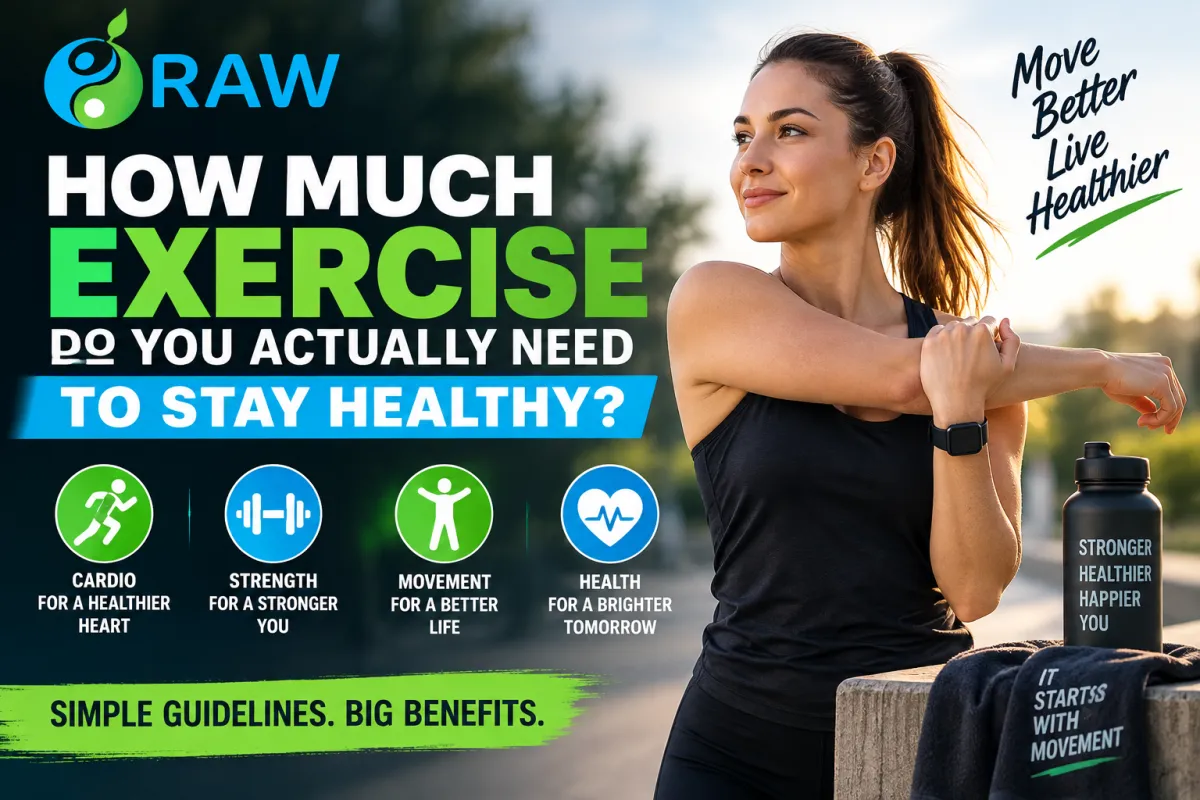
How Much Exercise Do You Actually Need to Stay Healthy?
Fitness has become surprisingly complicated.
One person tells you to train every day. Another says three workouts a week are enough. Someone else insists you need thousands of steps, long cardio sessions, heavy strength training, or a carefully calculated workout schedule.
Then there is the person who says you should simply "move more."
So what actually matters?
How much exercise does your body really need to stay healthy?
The answer is more reasonable than many people think.
You do not need to spend two hours in a gym every day. You do not need to train like an athlete. And you certainly don't need to destroy yourself during every workout.
For most adults, the foundation is regular aerobic activity combined with strength training and plenty of everyday movement.
Current guidance from the CDC recommends at least 150 minutes of moderate-intensity aerobic activity each week, or 75 minutes of vigorous activity, plus muscle-strengthening activity on at least two days each week.
The important part is understanding what those numbers actually mean for your life.
The 150-Minute Number Is Not as Intimidating as It Sounds
"150 minutes a week" can sound like a major commitment.
But break it down.
Thirty minutes of moderate activity, five days a week, gets you there.
That could be a brisk walk.
Cycling.
Swimming.
A fitness class.
A combination of different activities.
You can also spread activity throughout the week rather than trying to complete everything in a few long sessions. The CDC specifically notes that physical activity can be broken into smaller chunks of time.
The bigger takeaway is that exercise does not need to dominate your schedule to be useful.
It needs to happen consistently.
More Is Not Automatically Better
Once people become interested in fitness, there is a tendency to assume more exercise must mean better results.
More workouts.
More miles.
More calories burned.
More sweat.
But your body also needs recovery.
The goal is not to accumulate as much exercise as possible. The goal is to get enough physical activity to create meaningful health benefits while still allowing your body to recover and adapt.
The World Health Organization recommends 150 to 300 minutes of moderate-intensity aerobic activity per week for adults, or 75 to 150 minutes of vigorous activity, with additional health benefits possible at higher levels.
That gives you flexibility.
You can build your routine around your schedule, fitness level, preferences, and goals.
Strength Training Belongs in the Equation
One of the biggest mistakes people make is thinking exercise means cardio.
Walking and other aerobic activities are important, but they are only part of the picture.
Adults should also perform muscle-strengthening activities at least two days per week, working the major muscle groups.
Why?
Because strength affects much more than how much weight you can lift.
It supports everyday movement.
It helps you maintain muscle.
It contributes to physical function.
It makes activities such as climbing stairs, carrying groceries, getting up from a chair, and lifting objects easier.
As you get older, maintaining strength becomes increasingly important for staying capable and independent.
That's why a balanced fitness routine should not be built around cardio alone.
You Don't Have to Become a Gym Person
Some people hear the word "exercise" and immediately imagine a crowded gym.
But physical activity is much broader than that.
Walking to work.
Cycling.
Playing recreational sports.
Hiking.
Swimming.
Doing active household tasks.
Taking a walk after dinner.
All of these can contribute to your overall activity.
The WHO recognizes physical activity across recreation, transportation, work, household tasks, and other parts of daily life.
This matters because the best exercise routine is one you can actually maintain.
If you hate running, you don't have to run.
If you enjoy walking, walk.
If you enjoy lifting weights, strength train.
If you like playing sports, use sports as part of your activity.
Fitness doesn't need to look the same for everyone.
What About Steps?
Steps can be a useful way to monitor how active you are, but there is no universal magic number that everyone must reach.
Instead of becoming obsessed with hitting a specific target, look at your overall movement.
If you currently spend most of the day sitting, increasing your daily walking can be a meaningful improvement.
Take a short walk in the morning.
Move during your lunch break.
Walk after dinner.
Take the stairs when practical.
Park farther away.
These small decisions add movement to your day without requiring another formal workout.
The CDC emphasizes a simple principle: some physical activity is better than none, and adults who sit less and engage in any amount of moderate or vigorous activity can gain health benefits.
Your Fitness Routine Should Match Your Goal
How much exercise you need also depends on what you're trying to accomplish.
If your goal is general health, meeting the basic activity recommendations provides a strong foundation.
If your goal is building significant muscle, your strength training program may need more structure and progression.
If you're training for a race, your cardiovascular workload will look different.
If you're trying to improve mobility or remain active as you age, strength, balance, and movement quality become particularly important.
There isn't one perfect routine because there isn't one universal fitness goal.
The mistake is copying someone else's training schedule without considering whether it fits your own life.
Consistency Beats the Perfect Workout
You don't need to have the perfect exercise program.
You need a routine you can repeat.
A person who exercises moderately and consistently for years will build a very different outcome from someone who trains intensely for three weeks and then stops for three months.
That's why sustainable fitness matters.
Start with an amount of activity you can realistically maintain.
Then build from there.
If you're currently doing very little, don't feel pressured to immediately reach the full recommendation. The WHO advises adults who are not meeting the recommendations to start with small amounts and gradually increase frequency, intensity, and duration.
Progress is supposed to be progressive.
What a Balanced Week Could Look Like
For someone focused on general health, a simple week might look something like this:
Monday: 30-minute brisk walk and strength training
Tuesday: 30-minute walk
Wednesday: Strength training and light movement
Thursday: 30-minute brisk walk
Friday: Strength training
Saturday: Longer walk, hike, bike ride, or recreational activity
Sunday: Easy movement and recovery
That's only one example.
Your schedule could look completely different.
The point is to combine aerobic activity, strength training, and regular movement rather than believing one type of exercise has to do everything.
What If You Are Starting From Zero?
Don't let the recommended numbers discourage you.
If you're currently inactive, your first goal isn't perfection.
It's movement.
Start with a short walk.
Do a simple strength workout.
Take more breaks from sitting.
Find activities you actually enjoy.
Then gradually increase what you're doing.
Even small amounts of physical activity provide benefits, and the current guidance encourages inactive adults to begin with manageable amounts and build gradually.
The hardest workout is often the one you keep postponing.
Start small enough that you can actually begin.
Final Thoughts
You don't need to live in the gym to be healthy.
For most adults, a strong foundation looks surprisingly simple: regular aerobic activity, strength training at least twice a week, and more movement throughout the day.
The CDC recommends at least 150 minutes of moderate aerobic activity or 75 minutes of vigorous activity each week, alongside muscle-strengthening activity on at least two days.
But numbers are only useful when they help you create habits.
The real goal is to build a lifestyle where movement becomes normal.
Walk more.
Lift weights.
Move throughout the day.
Recover properly.
Stay consistent.
At Raw Fitness, we believe effective fitness doesn't need to be complicated. A good program should fit your life, support your goals, and give you a clear path toward becoming stronger and healthier.
You don't need more complicated workouts.
You need a plan you can actually follow.
