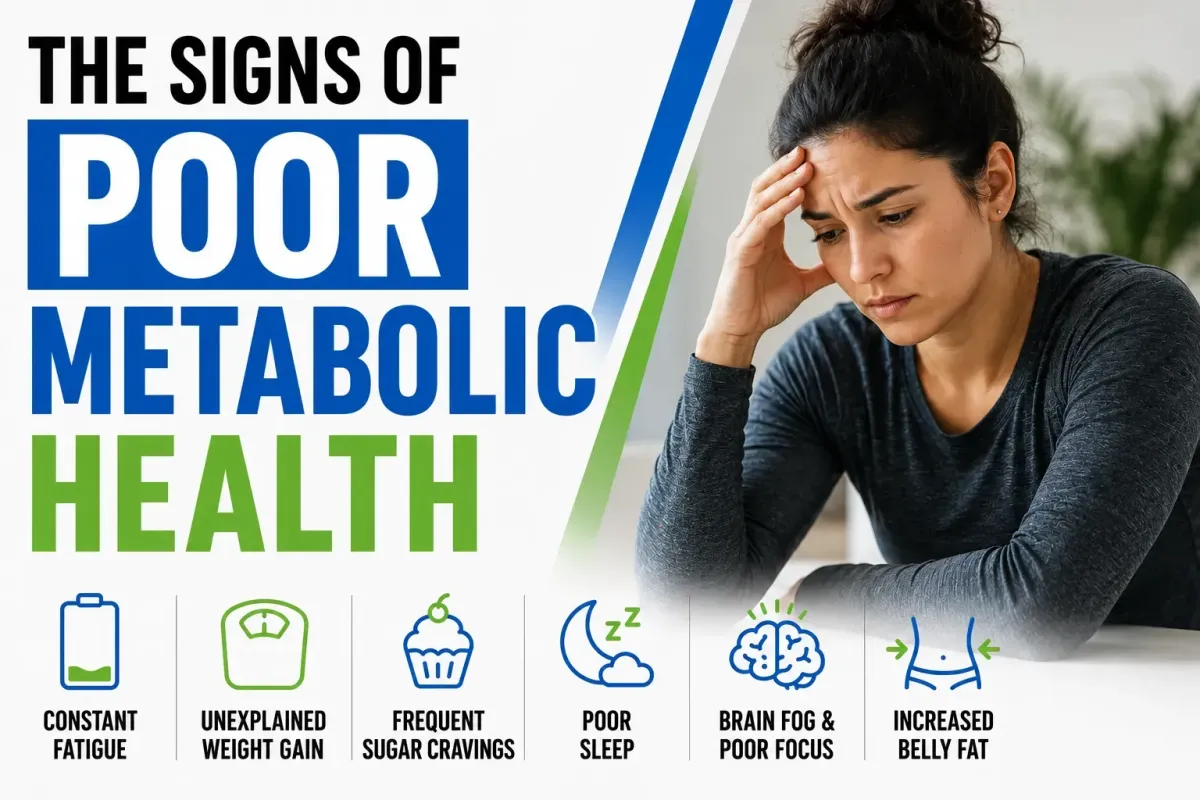
The Signs of Poor Metabolic Health: What Your Body May Be Trying to Tell You
Why Metabolic Health Matters More Than Most People Realize
Most people rarely think about their metabolic health.
Instead, they focus on:
Weight loss
Body fat
Clothing size
The number on the scale
While these factors can be important, they only tell part of the story.
Metabolic health affects nearly every system in your body.
It influences:
Energy levels
Blood sugar regulation
Fat storage
Hormone balance
Heart health
Recovery
Mental clarity
Long-term disease risk
The challenge is that poor metabolic health often develops slowly.
Many people experience warning signs for years before realizing something is wrong.
What Is Metabolic Health?
Metabolic health refers to how efficiently your body produces, stores, and uses energy.
A healthy metabolism helps regulate:
Blood sugar levels
Cholesterol levels
Blood pressure
Body composition
Insulin sensitivity
Energy production
When these systems begin functioning poorly, the body starts sending warning signals.
Unfortunately, many people dismiss these symptoms as normal aging.
Sign #1: Constant Fatigue and Low Energy
One of the earliest signs of poor metabolic health is persistent fatigue.
Many adults wake up tired.
They rely on caffeine throughout the day.
They experience energy crashes in the afternoon.
They feel exhausted despite getting enough sleep.
While fatigue can have many causes, metabolic dysfunction often contributes to:
Poor energy production
Blood sugar fluctuations
Increased inflammation
Reduced recovery
Feeling tired all the time should not be considered normal.
Sign #2: Weight Gain That Seems Impossible to Control
Many adults notice weight gain even though their eating habits have not changed dramatically.
This is particularly common around the abdomen.
While weight gain can result from excess calorie intake, metabolic health also plays an important role.
Poor metabolic health can affect:
Appetite regulation
Fat storage
Hormonal balance
Insulin sensitivity
As these systems become less efficient, maintaining a healthy weight becomes more challenging.
Sign #3: Frequent Sugar Cravings
Do you constantly crave sweets or processed carbohydrates?
Frequent cravings may be more than a lack of willpower.
Blood sugar instability can create cycles of:
Energy crashes
Hunger spikes
Cravings
Overeating
When blood sugar levels fluctuate throughout the day, the body often seeks quick sources of energy.
This can lead to unhealthy eating patterns that further impact metabolic health.
Sign #4: Poor Sleep Quality
Sleep and metabolic health are closely connected.
People with poor metabolic health often struggle with:
Falling asleep
Staying asleep
Feeling rested upon waking
At the same time, poor sleep can worsen metabolic function.
This creates a cycle where:
Poor sleep → Poor metabolic health → Lower energy → More health problems
Breaking this cycle is essential for long-term wellness.
Sign #5: Difficulty Recovering From Exercise
Exercise should help you feel stronger and healthier.
However, poor metabolic health can make recovery more difficult.
Signs include:
Excessive soreness
Persistent fatigue
Slow recovery
Lack of exercise progress
Recovery requires the body to efficiently manage energy, repair tissues, and regulate inflammation.
When metabolic health declines, recovery often suffers as well.
Sign #6: Increased Belly Fat
Many people notice changes in body composition long before other health problems appear.
Belly fat is often associated with:
Chronic stress
Poor nutrition
Lack of physical activity
Reduced muscle mass
Insulin resistance
While body fat alone does not determine metabolic health, excess abdominal fat is often a warning sign that should not be ignored.
Sign #7: Brain Fog and Poor Concentration
Your brain depends heavily on stable energy production.
Poor metabolic health can contribute to:
Difficulty concentrating
Forgetfulness
Mental fatigue
Reduced productivity
Many adults assume brain fog is caused by stress alone.
In reality, metabolic health often plays a significant role.
Why Poor Metabolic Health Is Becoming More Common
Modern lifestyles create the perfect environment for metabolic problems.
Many adults spend most of their day:
Sitting
Looking at screens
Managing chronic stress
Sleeping too little
Eating highly processed foods
Moving less than ever before
Over time, these habits begin affecting the body's ability to regulate energy efficiently.
How to Improve Metabolic Health Naturally
The good news is that metabolic health can often improve significantly through consistent lifestyle changes.
Prioritize Strength Training
Building muscle improves insulin sensitivity and supports long-term metabolic function.
Move More Throughout the Day
Daily movement helps regulate blood sugar and supports overall health.
Improve Sleep Quality
Quality sleep improves recovery, hormones, and energy regulation.
Eat More Whole Foods
Focus on lean proteins, vegetables, fruits, healthy fats, and minimally processed foods.
Manage Stress
Reducing chronic stress helps support hormone balance and overall wellness.
Small Changes Can Create Powerful Results
Many people wait until serious health problems develop before taking action.
The reality is that poor metabolic health often provides warning signs long before disease appears.
If you regularly experience:
Fatigue
Weight gain
Cravings
Poor sleep
Brain fog
Low energy
Your body may be telling you it needs attention.
The earlier you address these issues, the easier it becomes to improve your health.
Take Control of Your Health Today
At Raw Fitness, we help adults build sustainable habits that improve strength, energy, body composition, and metabolic health.
No extreme diets.
No quick fixes.
Just realistic coaching designed to help you feel stronger, healthier, and more energized for years to come.
Because better health starts long before symptoms become serious.
