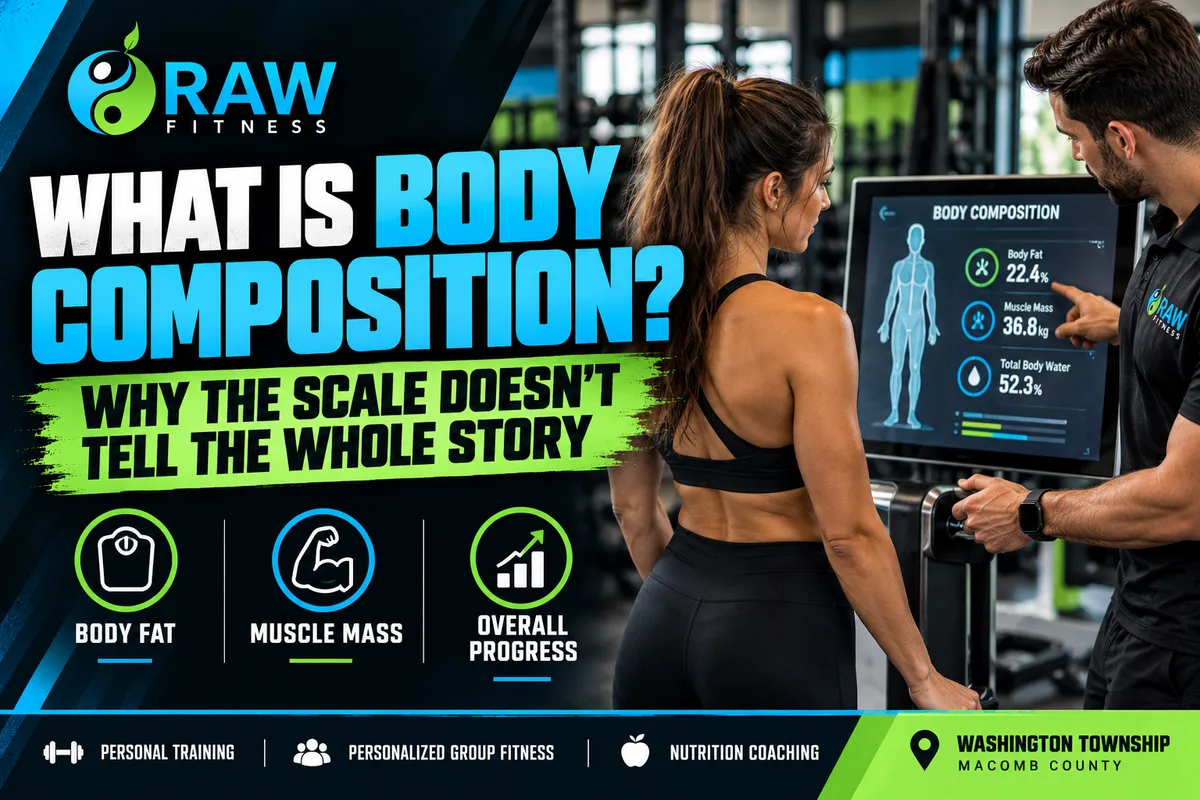
What Is Body Composition? Look Beyond the Scale
Have you ever stepped on the scale, noticed that your weight has barely changed, and wondered whether your workouts are actually working?
You're not alone.
Many people judge their fitness progress using a single number: their body weight. But weight doesn't tell the whole story. You could be building muscle, losing body fat, and improving your fitness without seeing a dramatic change on the scale.
That's where body composition comes in.
At Raw Fitness in Washington Township, Michigan, understanding your starting point can help you build a more personalized fitness and nutrition plan. Here's what body composition means, why it matters, and how you can use it to track your progress more effectively.
What Is Body Composition?
Body composition describes the different components that make up your body, including fat mass and fat-free mass.
Fat-free mass includes muscle, bones, organs, and body water. These components all contribute to your total body weight.
Two people can weigh exactly the same but have different body compositions. One person may have more muscle mass, while another has a higher proportion of body fat.
This is why body weight alone cannot tell you everything about your health, strength, or fitness progress.
Understanding body composition gives you another way to evaluate changes in your body as you work toward your goals.
Why Your Weight Doesn't Always Reflect Your Progress
If your main goal is to lose body fat, you might expect the number on the scale to decrease every week.
In reality, weight can fluctuate for several reasons, including hydration, food intake, digestion, hormonal changes, and changes in muscle mass.
Here are three reasons the scale might not tell the full story.
1. You May Be Losing Fat While Building Muscle
When you combine resistance training with appropriate nutrition, you may lose body fat while gaining or maintaining muscle.
This can lead to changes in your body shape even when your total weight changes very little.
For example, your clothes might fit differently, your strength might improve, and everyday activities might feel easier despite only a small change on the scale.
2. Water Weight Can Affect Your Results
Your body weight naturally changes throughout the day. Sodium intake, carbohydrate intake, hydration, and exercise recovery can all influence temporary water-weight changes.
A sudden increase on the scale does not automatically mean you've gained body fat.
Instead of reacting to every daily fluctuation, look for longer-term patterns and consider other indicators of progress.
3. Your Fitness Can Improve Before Your Weight Changes Significantly
You might notice that you can lift heavier weights, walk longer distances, recover more comfortably, or complete workouts with less effort.
These are meaningful improvements even if your body weight remains relatively stable.
Your fitness journey should consider performance, consistency, and how you feel, rather than relying entirely on the scale.
How Body Composition Measurements Can Help
Body composition measurements can provide additional information about changes in fat mass and fat-free mass.
When used appropriately, they can help you and your coach understand whether your current approach is moving you toward your goals.
At Raw Fitness, a body-composition scan can be part of the process of understanding your starting point and developing a personalized plan.
Measurements are estimates rather than perfect readings. Results can vary with hydration, recent exercise, food intake, and the measurement method used. For a more useful comparison, follow consistent measurement conditions and focus on trends over time rather than a single reading.
Four Ways to Track Fitness Progress Beyond the Scale
You don't need to depend on one measurement to understand whether your routine is helping.
Consider tracking these four areas.
1. Changes in Body Composition
If fat loss is your goal, periodic body-composition measurements may help you monitor changes in estimated fat mass and fat-free mass.
Use them alongside other indicators rather than treating a single reading as a final verdict.
2. Strength and Workout Performance
Are you performing exercises with better technique? Can you complete more repetitions with control? Has an activity that once felt difficult become easier?
Tracking these improvements helps you recognize progress in strength and physical capability.
3. Measurements and Clothing Fit
Changes in waist measurements and how your clothes fit can provide useful context when body weight stays relatively stable.
Take measurements consistently and avoid drawing conclusions from small day-to-day differences.
4. Energy, Recovery, and Consistency
Notice how you feel throughout the day, how well you recover after workouts, and how consistently you follow your routine.
These factors can help you identify habits that are working well and areas that may need adjustment.
How Nutrition and Strength Training Work Together
Body composition isn't determined by exercise alone. Your nutrition habits, training routine, recovery, and consistency all play important roles.
Strength training helps you build or maintain muscle while improving strength and physical function.
Nutrition coaching can help you establish eating habits that support your goals, including appropriate energy intake, balanced meals, and adequate protein.
Consistent recovery gives your body time to adapt to training and helps you maintain a sustainable routine.
There is no single approach that works for everyone. Your plan should reflect your goals, current fitness level, preferences, and individual circumstances.
Body Composition and Personalized Fitness at Raw Fitness
If you're working toward fat loss, improved strength, or better overall fitness, knowing where you're starting can help you make more informed decisions.
Raw Fitness in Washington Township offers personalized fitness and nutrition coaching designed around individual goals and ability levels.
Depending on your needs, your approach may include:
Personal Training: Individualized strength training and coaching to help you progress with appropriate guidance.
Personalized Group Fitness: A structured training environment with coaching and a plan tailored to your goals.
Nutrition Coaching: Practical guidance and accountability to help you build sustainable eating habits.
Progress Assessments: Body-composition measurements and other indicators to help you review your progress over time.
Raw Fitness serves Washington Township and surrounding communities, including Macomb Township, Shelby Township, Romeo, and other nearby areas.
If you're tired of judging your progress by the scale alone, a more personalized approach may help you understand what is changing and what to work on next.
Ready to Understand Your Fitness Progress?
Your body weight is only one part of your fitness journey. Strength, body composition, daily habits, and consistency can all provide useful information about your progress.
Rather than chasing a particular number on the scale, focus on building a routine that supports your health and goals over time.
Raw Fitness offers a free No-Sweat Intro Session for people interested in learning about their starting point and exploring a personalized fitness plan.
Book your session to discuss your goals, review your options, and find a practical next step toward a stronger, healthier lifestyle.
Frequently Asked Questions
What is a healthy body composition?
A healthy body composition depends on factors such as age, sex, health status, and individual circumstances. There is no single ideal percentage that applies to everyone. A qualified professional can help you interpret measurements in context.
Can I lose fat without losing weight?
Yes. If you lose body fat while gaining or maintaining muscle, your total body weight may change very little. This is one reason to track more than the scale.
How often should I measure body composition?
There is no universal schedule. Measuring periodically under similar conditions can make it easier to compare longer-term trends. Measuring too frequently may create unnecessary concern over normal fluctuations.
Is a body-composition scan completely accurate?
No. Body-composition scans estimate different body components, and their accuracy depends on the technology and measurement conditions. Hydration and recent exercise can affect results, so interpret readings as estimates rather than exact values.
Does Raw Fitness offer body-composition assessments?
Raw Fitness promotes a body-composition scan as part of its free No-Sweat Intro Session. Contact the team to confirm current assessment details and book a session.
