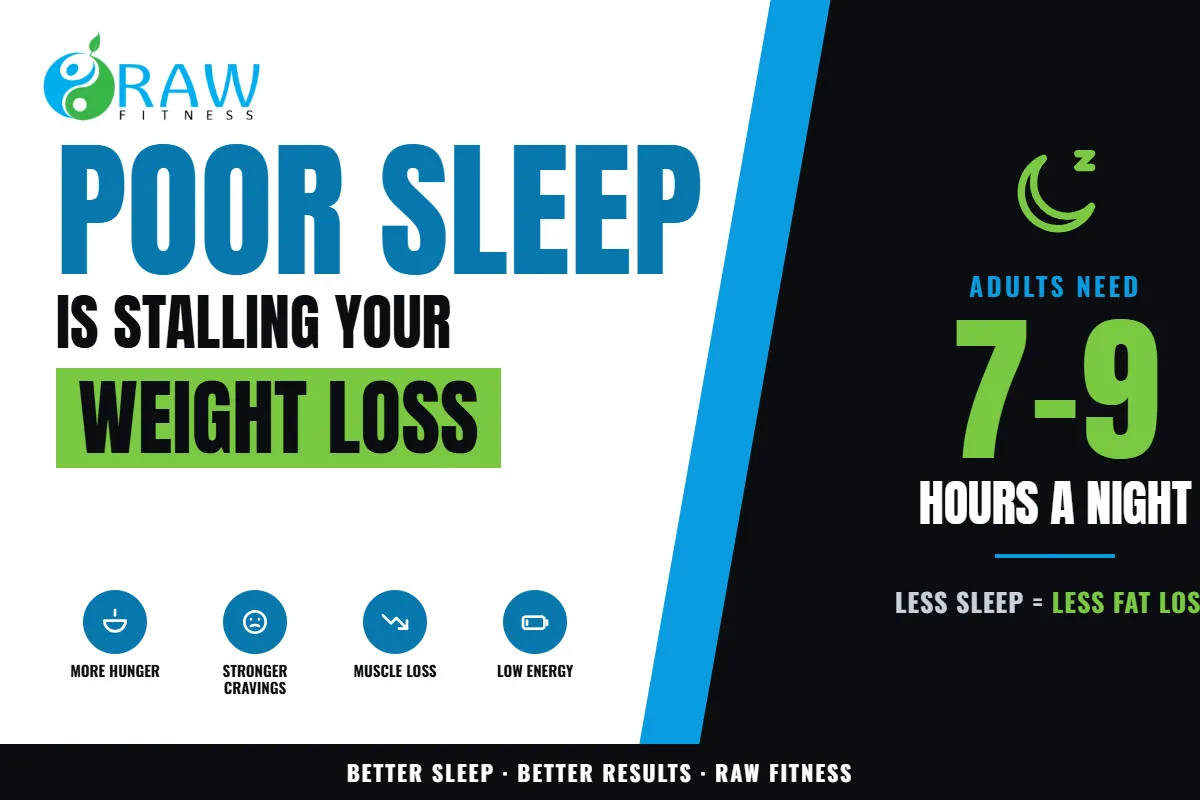
Sleep and Weight Loss: Why Poor Sleep Is Stalling Your Results
You're training hard, tracking your meals and drinking your water. But the scale won't budge, and by 3 p.m. you're fighting off cravings for anything sweet. If that sounds familiar, the problem may not be your workouts or your diet. It may be your sleep.
The link between sleep and weight loss is one of the most overlooked parts of getting healthy. Poor sleep changes your hunger hormones, drains your energy for training, and can even cause your body to hold on to fat.
Here's what's really happening when you don't sleep enough, and the simple habits our coaches at Raw Fitness in Washington Township recommend to fix it.
How Poor Sleep Stalls Your Weight Loss
1. It turns up your hunger
Sleep helps control two key hunger hormones. Ghrelin tells you you're hungry, and leptin tells you you're full. After a short night, ghrelin tends to rise and leptin tends to fall. The result: you feel hungrier and less satisfied, even after a full meal.
2. It makes cravings harder to resist
When you're tired, the part of your brain that handles self-control works less effectively. That's why junk food, sugary coffee drinks and late-night snacks feel so much harder to turn down after a bad night.
3. It changes what you lose
This is the part most people don't know. In a 2010 study in the Annals of Internal Medicine, adults on the same reduced-calorie diet slept either 8.5 or 5.5 hours a night for two weeks. With less sleep, the share of weight lost as fat dropped by 55 percent, and the loss of lean body mass rose by 60 percent. Same diet, worse results.
4. It drains your workouts
Poor sleep lowers your energy, strength and motivation. Workouts feel harder, recovery takes longer, and it's easier to skip the gym altogether.
5. It raises stress hormones
Short sleep can keep cortisol, your main stress hormone, elevated. Over time, high stress is linked with more fat storage around the midsection. (Read more in our post on the truth about belly fat.)
How Much Sleep Do You Need to Lose Weight?
Most adults need 7 to 9 hours of sleep per night. Yet a large share of American adults regularly get less than 7.
Quality matters as much as quantity. Eight hours of broken, restless sleep won't give you the same benefits as seven solid hours.
Signs your sleep may be holding back your results:
You need caffeine to function by mid-morning
You crave sugar or carbs in the afternoon and evening
You wake up tired even after a full night in bed
Your workouts feel harder than they should
You've hit a weight loss plateau despite consistent effort
If you snore loudly, stop breathing during sleep, or feel exhausted no matter how long you sleep, talk to your doctor. Conditions like sleep apnea are common and treatable.
7 Sleep Habits That Support Weight Loss
Keep a consistent schedule. Go to bed and wake up at the same time every day, weekends included. Your body clock loves routine.
Cut caffeine after 2 p.m. Caffeine can stay in your system for 6 hours or more and quietly reduce sleep quality.
Make your bedroom cool, dark and quiet. A temperature around 65°F, blackout curtains and a fan or white noise machine all help.
Put screens away 30 to 60 minutes before bed. Swap scrolling for reading, stretching or a warm shower.
Finish dinner 2 to 3 hours before bed. Heavy late meals and alcohol both disrupt deep sleep.
Get morning daylight. Ten minutes outside after you wake up helps set your body clock, even on gray Michigan mornings.
Train consistently, but not too late. Regular exercise improves sleep. If late workouts keep you wired, move them earlier in the day.
Weight Loss Is More Than Diet and Exercise
Real, lasting weight loss comes from the full picture: how you train, how you eat, how you manage stress, and how well you sleep. When one piece is missing, the others can't do their job.
That's why coaching at Raw Fitness looks at your whole lifestyle, not just your workouts. Through The RAW Program and our habit-based nutrition coaching, your coach helps you:
Build a training schedule that fits your energy and your life
Plan meals that keep cravings under control
Create simple evening routines that support better sleep
Track progress beyond the scale, including body composition
Stuck on a plateau? Book your free No-Sweat Intro Session at our Washington Township studio. We'll scan your body composition, map out a simple plan, and help you find what's really holding you back.
Frequently Asked Questions
Can lack of sleep cause weight gain?
Yes. Short sleep increases hunger and cravings, lowers energy for activity, and can make it easier to overeat. Over weeks and months, that often leads to weight gain.
Do you burn fat while you sleep?
Your body keeps burning calories overnight to repair muscle and run vital functions. Good sleep also helps your body use fat for energy during the day, especially when you're in a calorie deficit.
Is 6 hours of sleep enough to lose weight?
You can lose weight on 6 hours, but research suggests more of it may come from muscle instead of fat. Aim for 7 to 9 hours for the best results.
Does napping help with weight loss?
A short nap of 20 to 30 minutes can boost energy and reduce afternoon cravings. Long or late naps can make it harder to sleep at night.
Should I work out if I slept badly?
A lighter session, like a walk or mobility work, is usually a better choice than an intense workout. Save your hardest training for well-rested days.
