
weight loss & fitness BLOG
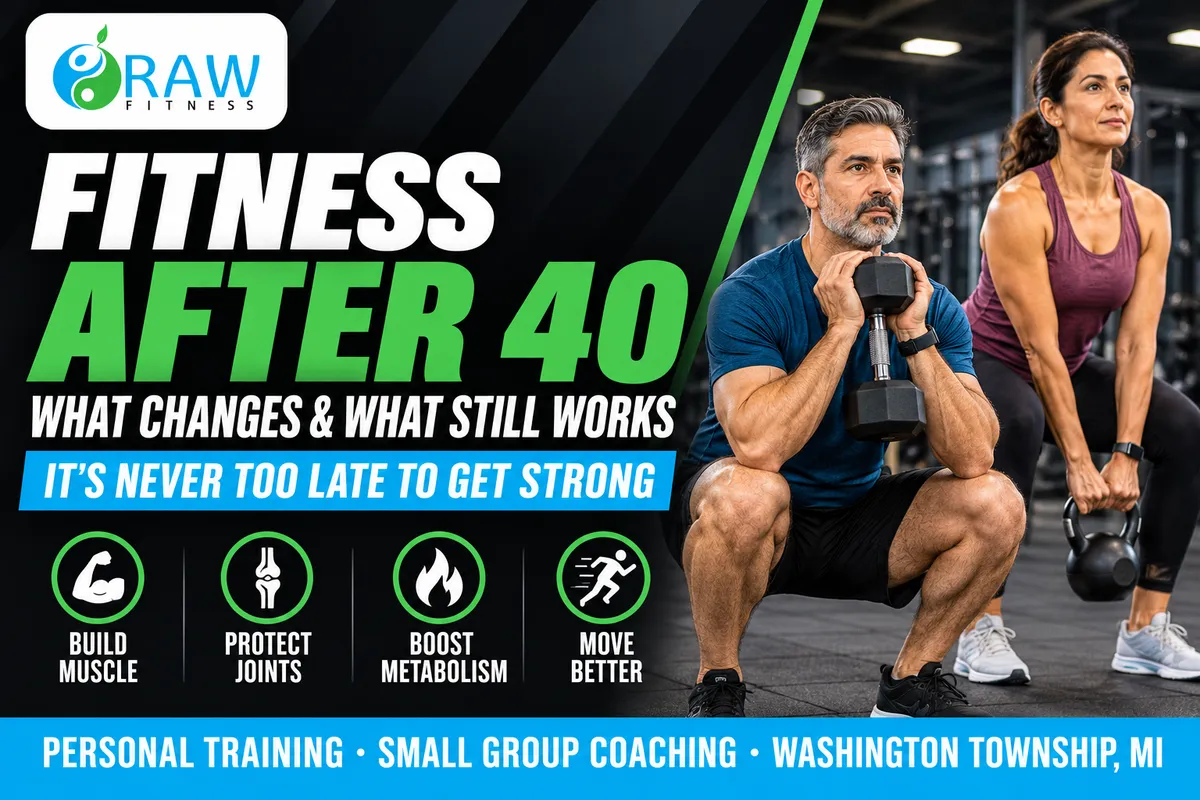
Fitness After 40 in Washington Township: What Changes and What Still Works
You used to be able to skip a few weeks at the gym, eat whatever you wanted, and bounce right back. Now your knees ache after a long day, the weight sticks around longer, and recovery takes a little more time. Does that mean your best fitness years are behind you?
Not at all. Fitness after 40 looks a little different, but many adults are stronger, leaner and more energetic in their 40s and 50s than they were in their 20s. The key is training smarter, not just harder.
In this guide, our coaches at Raw Fitness in Washington Township explain what really changes in your body after 40, what still works, and how to build a routine you can stick with for decades.
What Changes in Your Body After 40
1. You slowly lose muscle
Starting around age 30, adults gradually lose muscle mass. Harvard Health notes that men may lose up to 3 to 5 percent of their muscle per decade after 30. By your 40s, that loss starts to show up as less strength, a softer shape and a slower metabolism.
2. Your metabolism feels slower
Less muscle means your body burns a little less energy at rest. Add a busier life and less daily movement, and the pounds creep on more easily, especially around the midsection.
3. Recovery takes longer
The workouts that left you sore for a day in your 20s might leave you sore for two or three days now. Your body still adapts, it just needs a bit more time between hard sessions.
4. Joints and mobility need more attention
Years of sitting at a desk, driving and old injuries can leave hips, shoulders and backs stiff. Ignoring mobility makes aches more likely.
5. Hormones shift
Women approaching menopause and men with gradually declining testosterone often notice changes in energy, sleep, body fat and muscle. Strength training and good nutrition help counter many of these effects.
The bottom line: These changes are real, but they're not a life sentence. Harvard's experts put it simply: it's never too late to rebuild muscle.
What Still Works: 6 Training Priorities After 40
Strength training comes first. Lifting weights is the most effective way to rebuild muscle, protect your bones and keep your metabolism strong. The CDC recommends muscle-strengthening activities at least 2 days a week for all adults.
Progress gradually. You can still get stronger every month. Add a little weight or a few reps over time instead of chasing max lifts.
Focus on form over ego. Controlled reps with good technique build muscle without beating up your joints. A coach can spot small form issues before they turn into injuries.
Make mobility part of every workout. Five to ten minutes of warm-up drills for hips, shoulders and the upper back keeps you moving freely and reduces aches.
Keep cardio, but be smart about it. Brisk walks, cycling, rowing and short intervals support heart health without the pounding of daily long runs.
Plan your recovery. Rest days aren't lazy days. They're when your body actually gets stronger. Aim for two to three strength sessions a week with time to recover in between.
A Simple Weekly Plan for Adults Over 40
Day | Focus |
|---|---|
Monday | Full-body strength: squats, rows, presses, core |
Tuesday | 30-minute brisk walk or bike ride |
Wednesday | Full-body strength: deadlift variations, push-ups, pull-downs, carries |
Thursday | Mobility and stretching, 20 to 30 minutes |
Friday | Full-body strength or a small group session |
Saturday | Active fun: hike, sport, yard work or a long walk |
Sunday | Rest |
New to exercise? Start with two strength days and build up over a few weeks.
Nutrition and recovery matter more now
Eat enough protein. Older adults may need more protein to build and keep muscle. Aim for a protein source at every meal (see our guide to protein for weight loss).
Prioritize sleep. Seven to nine hours a night supports recovery, hormones and fat loss.
Stay hydrated. Thirst signals get weaker with age, so drink water throughout the day.
Track more than the scale. Strength gains, body measurements and body composition tell you far more about your progress after 40.
Fitness After 40 at Raw Fitness in Washington Township
Many of our members are adults in their 40s, 50s and beyond who were tired of starting over every Monday. Some hadn't exercised in years. Others had old injuries that made them nervous about lifting. All of them got a plan built around their body, their schedule and their goals.
Choose the coaching style that fits you:
Personal Training: One-on-one coaching with full attention on your form, past injuries and progress.
Personalized Group Fitness: Your own custom plan, coached in a small, supportive group of adults like you.
The RAW Program: Training, nutrition and accountability combined for lasting results.
See what's possible in our Success Stories.
It's never too late to get strong. Book your free No-Sweat Intro Session at our Washington Township studio, serving Macomb County. You'll get a body composition scan, a simple workout and food plan, and time to ask questions. No pressure, no judgment.
Frequently Asked Questions
Is it harder to get in shape after 40?
It can take a little longer, mostly because of muscle loss and slower recovery. But adults over 40 still build strength and lose fat with consistent training, good nutrition and enough sleep.
What is the best exercise for people over 40?
Strength training is the most important, because it rebuilds muscle and protects bones. Pair it with walking or other cardio and regular mobility work.
How many days a week should I work out after 40?
Two to three strength sessions a week, plus some daily walking or light activity, is a great target for most people.
Can I lose belly fat after 40?
Yes. You can't target one area, but building muscle, eating enough protein, sleeping well and managing stress all help reduce overall body fat, including around the belly.
Is it safe to start lifting weights after 40 if I've never done it?
Yes, for most people. Start with lighter weights and get coaching on form. If you have a medical condition or past injury, check with your doctor first.

These blogs are filled with knowledge but our team has 10x and can't wait to help you!
Raw Fitness Reviews
58928 Van Dyke Rd, Washington Township, Michigan 48094
info@madeatrawfitness.com


© 2026 Raw Fitness
58928 Van Dyke Rd, Washington Township, Michigan 48094
info@madeatrawfitness.com
© 2026 Raw Fitness
|
|