
weight loss & fitness BLOG
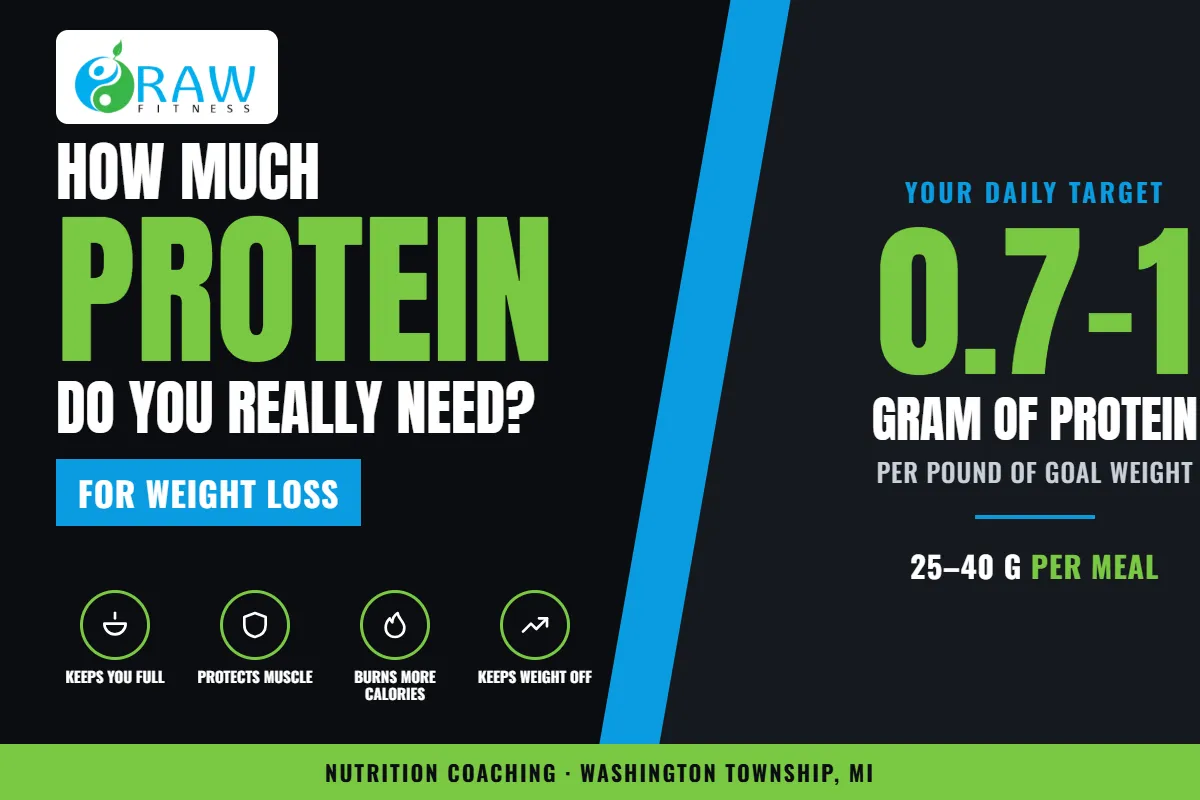
Protein for Weight Loss: How Much You Really Need Each Day
Protein keeps you full, protects your muscle while you lose fat, and helps your body burn a little more energy during digestion. Yet most people trying to lose weight eat far less of it than they need.
In this guide, our coaches at Raw Fitness in Washington Township explain how much protein you really need each day, the easiest ways to get it, and the mistakes that hold people back.
Why Protein Matters for Weight Loss
Protein does more for fat loss than any other nutrient. Here is why it deserves a place at every meal.
1. It keeps you full longer
Protein is the most filling of the three macronutrients. A meal built around chicken, eggs or Greek yogurt keeps hunger away far longer than a bowl of cereal with the same calories. When you're less hungry, eating less stops feeling like a fight.
2. It protects your muscle
When you eat in a calorie deficit, your body can break down muscle as well as fat. Eating enough protein, especially alongside strength training, tells your body to keep the muscle and burn the fat. That matters even more after 30, when we naturally start losing muscle each decade.
3. It burns more calories during digestion
Your body uses energy to digest food. Protein takes the most effort: roughly 20 to 30 percent of its calories are used just to break it down, compared with about 5 to 10 percent for carbs and 0 to 3 percent for fat.
4. It helps you keep the weight off
Muscle supports a healthy metabolism. People who keep their muscle while losing weight find it much easier to maintain their results instead of regaining everything a few months later.
How Much Protein Do You Need to Lose Weight?
For most active adults trying to lose fat, a good daily target is 0.7 to 1 gram of protein per pound of your goal body weight.
You may have heard of the official recommendation of 0.36 grams per pound. That number is the minimum to prevent deficiency in a sedentary person. It isn't designed for someone who wants to lose fat, build strength and feel full while eating less.
Goal body weight | Daily protein target | Per meal (3 meals + 1 snack) |
|---|---|---|
140 lbs | 100–140 g | 25–35 g |
170 lbs | 120–170 g | 30–40 g |
200 lbs | 140–200 g | 35–50 g |
Tips for setting your number:
Start at the low end if you currently eat very little protein. Increase it over a few weeks.
Use your goal weight, not your current weight, if you have a lot to lose.
Spread it across the day. Around 25 to 40 grams per meal is easier to digest and keeps you full from breakfast to dinner.
If you have kidney disease or another medical condition, check with your doctor before raising your protein intake.
High-Protein Foods That Make It Easy
You don't need fancy supplements to hit your target. These everyday foods do most of the work (approximate amounts):
Food | Serving | Protein |
|---|---|---|
Chicken breast | 4 oz cooked | 35 g |
Lean ground turkey or beef | 4 oz cooked | 28–30 g |
Salmon or white fish | 4 oz cooked | 25 g |
Plain Greek yogurt | 1 cup | 20–23 g |
Cottage cheese | 1 cup | 25 g |
Eggs | 2 large | 12 g |
Lentils or black beans | 1 cup cooked | 15–18 g |
Protein shake | 1 scoop | 20–25 g |
For a deeper look at each option, read our Ultimate Guide to the Best Protein Sources.
What a 130-gram protein day looks like
Breakfast: 3-egg omelet with veggies and a cup of Greek yogurt (about 40 g)
Lunch: Grilled chicken salad with beans (about 40 g)
Snack: Protein shake or cottage cheese with fruit (about 25 g)
Dinner: Salmon, roasted potatoes and green beans (about 25 g)
No extreme dieting, no foods you hate. Just a protein source at every meal.
5 Protein Mistakes That Slow Your Results
Saving it all for dinner. Many people eat almost no protein until evening. A protein-rich breakfast helps control cravings for the rest of the day.
Counting "protein" snacks that are mostly sugar. Many bars and snacks marketed as high-protein contain more sugar than protein. Check the label.
Skipping strength training. Protein protects muscle best when you give your muscles a reason to stay. Pair it with two to three strength sessions a week.
Going too high, too fast. Jumping from 50 to 180 grams overnight is hard to sustain. Add 20 to 30 grams a week until you reach your target.
Forgetting fiber and water. More protein works best with plenty of vegetables, fruit and water to keep digestion comfortable.
How Nutrition Coaching in Macomb Makes Protein Simple
Knowing your protein target is one thing. Hitting it every day with work, kids and a busy schedule is another.
At Raw Fitness, our nutrition coaching is habit-based, not a strict diet. Your coach helps you:
Set a protein target that fits your body and goals
Build easy meals around foods you already enjoy
Pair your nutrition with strength training through The RAW Program
Stay accountable with regular check-ins
Ready to make protein work for you? Book your free No-Sweat Intro Session at our Washington Township studio. You'll get a body composition scan, a simple food and workout plan, and time to ask questions. No pressure, no hard sell.
Frequently Asked Questions
Can eating more protein help you lose belly fat?
Protein can't target one body part, but it helps you lose overall body fat by reducing hunger and protecting muscle. As total fat drops, belly fat goes down too.
Is too much protein bad for you?
For healthy adults, intakes up to about 1 gram per pound of body weight are considered safe. If you have kidney problems, talk to your doctor first.
Do I need protein shakes to lose weight?
No. Shakes are a convenient option, but whole foods like chicken, eggs, fish, yogurt and beans can cover your needs on their own.
When is the best time to eat protein?
Spread it evenly across your meals, with about 25 to 40 grams each time. A serving within a few hours after a workout also supports recovery.
How fast will I see results from eating more protein?
Most people notice less hunger within the first week. Changes in body composition usually show within 4 to 8 weeks when combined with strength training and a calorie deficit.

These blogs are filled with knowledge but our team has 10x and can't wait to help you!
Raw Fitness Reviews
58928 Van Dyke Rd, Washington Township, Michigan 48094
info@madeatrawfitness.com


© 2026 Raw Fitness
58928 Van Dyke Rd, Washington Township, Michigan 48094
info@madeatrawfitness.com
© 2026 Raw Fitness
|
|